
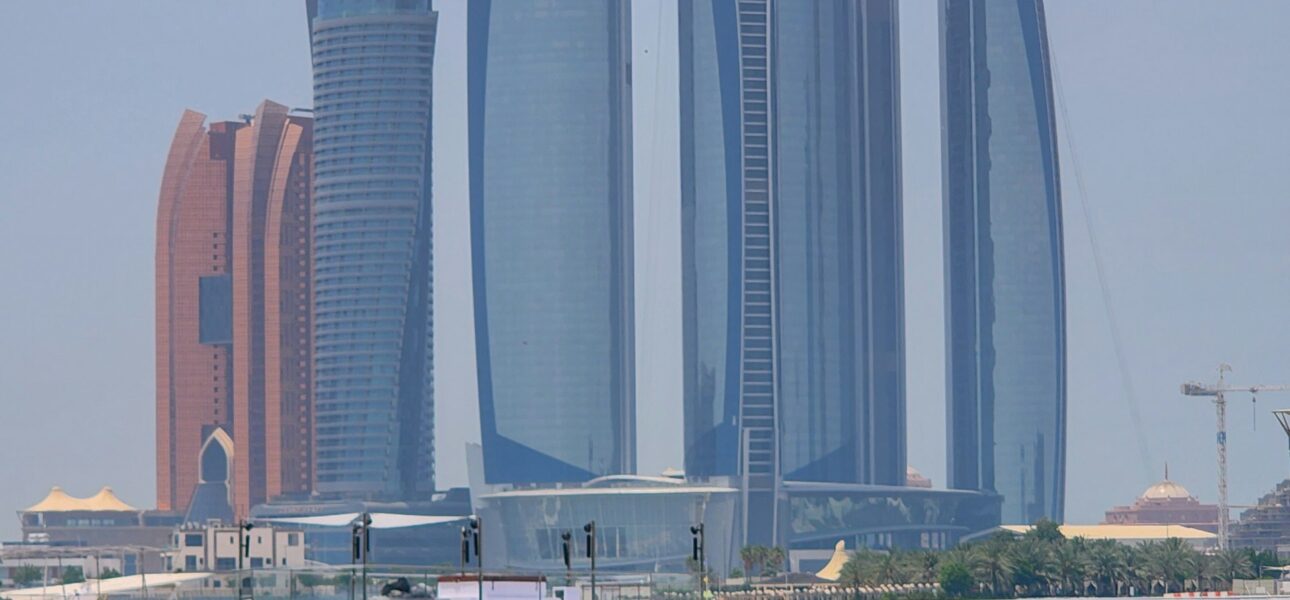
Abu Dhabi property can be a worthwhile investment for a buyer who chooses the right asset at the right price and can hold it for an appropriate period. That answer is deliberately conditional. A growing market does not guarantee that every apartment, villa or off-plan project will produce a strong return. The decision depends on your objective, financing, total costs, income assumptions and ability to absorb delays or a slower resale.
The market data explains why investors are paying attention. ADREC reported AED 142 billion in total real estate transactions during 2025. For the first half of 2026, it reported AED 117 billion in total transactions, including AED 70.4 billion in residential unit sales. These totals cover a market, not the performance of a particular home. They are a starting point for research, not an investment recommendation. Sources: ADREC 2025 results; ADREC H1 2026 market report announcement.
What makes Abu Dhabi attractive to some buyers?
Abu Dhabi offers different ways to participate in residential property: ready apartments, established villas and new off-plan communities. Its investment zones have also expanded. ADREC reported 50 investment zones across the emirate in H1 2026. Under Abu Dhabi’s property ownership law, non-citizens may acquire specified real-property rights within investment zones; the eligibility and rights attached to any particular property still need to be checked for the transaction. Sources: ADREC H1 2026 transaction announcement; Abu Dhabi ownership law.
Different districts support different buyer priorities. Yas Island combines homes with leisure and entertainment; Saadiyat Island is associated with culture and coastline; Al Reem Island offers a more urban apartment setting. These characteristics can shape demand, but they do not establish a reliable yield by themselves. The building, unit, asking price and competing supply matter more than a broad area label. Explore Abu Dhabi areas before narrowing your shortlist.
Look closely at the 2026 market numbers
ADREC’s H1 2026 report shows strong activity, but also reasons to be selective. Off-plan transactions accounted for 89% of residential sales value, and ten projects represented 43% of residential unit sales. That concentration suggests headline market totals may reflect the performance of a relatively small group of major launches. An investor should avoid applying those figures to every neighbourhood or project. Source: ADREC H1 2026 market report announcement.
The same report projects roughly 71,000 additional residential units by 2030, with deliveries expected to peak in 2028. New supply can broaden buyer choice, but it may also increase competition for tenants or resales in particular locations. Compare the supply expected near your chosen property, especially if your investment case depends on rent rising or a quick sale at handover. Source: ADREC H1 2026 market report announcement.
Calculate a realistic net return
An advertised gross yield is only a first calculation: annual rent divided by purchase price. It leaves out costs that affect what you actually keep. Build a simple model using the price you will pay, acquisition and financing costs, service charges, maintenance, management, insurance where applicable, vacancy and expected rent. If the property is off-plan, include the period before it can produce income.
For example, a unit that appears attractive at the listing price may produce a modest net return once annual charges and a vacant month are included. The reverse can also happen: a less fashionable property purchased at a sensible price may fit an income objective better. Use achieved comparable rents and recent sale evidence, not a best-case advertisement, and calculate how the result changes if rent is lower or costs are higher than expected.
Decide whether ready or off-plan fits your plan
A ready home can usually be inspected and may offer a clearer view of current building condition and rental comparables. An off-plan property may offer a different unit choice and staged payments, but income starts only after completion and a tenant is found. The payment plan, contract, developer, project approvals and estimated handover all deserve scrutiny. ADREC explains that off-plan buyer payments are held in regulated project escrow accounts and that sales are registered through SPAs. Those safeguards matter, but they do not remove every commercial risk. Source: ADREC developer guidance.
Choose the route that matches your liquidity and holding period. If you need rental income soon, a development years from completion may be a poor match even if its design is compelling. If you can hold longer, an off-plan option still needs to stand up to a conservative price and cash-flow comparison.
Five checks before you invest
- Set the objective. Is the property for income, long-term ownership, future personal use or a combination?
- Compare like with like. Use similar units in the same building or nearby developments when assessing price and rent.
- Count every cost. Request current fee information and confirm the transaction’s allocation of costs before signing.
- Stress-test the plan. Model a lower rent, longer vacancy, slower resale or delayed handover.
- Verify the documents. Confirm the listing, property rights, project details and contract terms through appropriate official and professional channels.
So, is Abu Dhabi property a good investment in 2026? It can be, but the investment case must be built property by property. Market growth creates possibilities; disciplined comparison determines whether one of those possibilities works for you. Alpha Realty helps buyers compare locations, projects and purchase routes with their own priorities in mind. Speak with an advisor to discuss a shortlist and the questions you should resolve before committing.
Featured image: Photo by Devarya Ruparelia on Unsplash.